Love Makes Life Complete: A Designer’s Embroidery Review
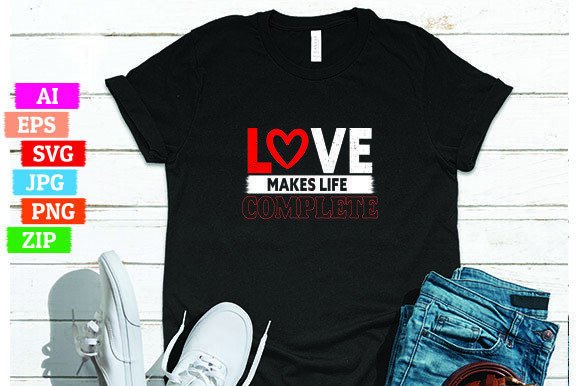
As a designer who spends more time staring at stitch simulations than I care to admit, I have learned that not every pretty graphic translates well to thread. We often see designs marketed as high-quality assets for print-on-demand businesses, but the jump from a flat digital image to a textured, stitched reality is where the real test happens. Recently, I took a close look at Love Makes Life Complete, a design currently categorized under Freebies and Graphics. While the source description highlights its utility for T-shirt printing, my interest lies in how this piece performs when put under the needle for actual embroidery projects.
First Impressions: Mood and Visual Personality
The first thing that strikes you about Love Makes Life Complete is its inherent warmth. The layout suggests a theme of connection and wholeness, which immediately narrows down its ideal applications. It does not scream for attention with aggressive typography or chaotic elements; instead, it offers a balanced composition that feels grounded. For an embroidery designer, this balance is crucial. Complex, sprawling designs often require massive hoop sizes and excessive run times, but this piece appears to have a contained footprint.
The visual personality here is versatile. It leans towards the sentimental without being overly cloying, making it suitable for a wide range of demographics. When I visualize this stitched out, I see it working beautifully on home goods and soft apparel. The shapes seem to lend themselves well to standard embroidery techniques, avoiding the microscopic details that often cause thread breaks or registration issues on home machines.
Real-World Application: From Digital File to Stitched Product
To truly evaluate a design, you have to imagine it on a physical product. I pictured using Love Makes Life Complete for a custom embroidered tote bag. Tote bags are a staple for small shop products and craft fair merchandise because they offer a large, flat canvas. On a heavy cotton canvas, this design would likely pop, especially if paired with contrasting thread colors. The sturdy fabric provides the necessary support for fill stitches, ensuring the design lays flat without puckering.
Another strong candidate for this artwork is sweatshirt embroidery. A crewneck sweatshirt in a neutral tone like heather grey or oatmeal would provide a perfect backdrop. Here, the design acts as a focal point on the chest or even larger on the back. Because sweatshirts are thick, the texture of the satin stitch or running stitch outlines would add a tactile dimension that print simply cannot achieve. This elevates the item from a basic garment to a personalized gift with perceived higher value.
I also considered baby embroidery. The gentle theme fits nursery decor or baby onesies perfectly. However, this requires caution. Baby skin is sensitive, and bulky stitches can be irritating. If adapting this for infant wear, I would recommend scaling it down and ensuring the back of the stitching is clean, perhaps using a soft cut-away stabilizer to prevent itchiness. For holiday embroidery, such as a Christmas pillow cover or a Valentine’s Day apron, the message resonates deeply with buyers looking for seasonal, heartfelt items.
Technical Considerations for the Embroiderer
While the aesthetic appeal is clear, the technical execution is where many free graphics fail. The product description notes that you receive editable AI, SVG, PNG, and EPS files. It is vital to understand that these are vector and raster graphics, not native machine embroidery files like DST or PES. As an experienced reviewer, I must emphasize that you cannot simply load an SVG into your embroidery machine. You will need to digitize this design or convert it using specialized software.
This conversion process is where your skill as a designer comes into play. You must determine the appropriate stitch density. If the original graphic has solid blocks of color, converting them directly to fill stitches might result in a stiff, cardboard-like feel on the fabric. I recommend breaking up large areas with lighter patterns or using a combination of satin stitch borders and internal running stitches to reduce bulk. Thread colors should be chosen carefully to maintain contrast against the fabric texture. A dark thread on a dark fabric will vanish, while high-contrast choices make the design readable from a distance.
Hoop size is another critical factor. Before starting, measure the design’s dimensions against your available hoops. If you are aiming for a small embroidered patch, you may need to simplify the design to ensure the tiny details do not get lost in the thread buildup. Curved surfaces, like caps, present their own challenges. The design must be centered perfectly, and the stabilizer must be robust enough to handle the curvature without shifting during stitching.
Navigating Fabric and Finish Challenges
Not all fabrics behave the same way. When working with stretchy fabric, such as jersey knits for t-shirts, stabilization is non-negotiable. Without proper hooping and stabilizer choice, Love Makes Life Complete could distort, pulling the fabric and ruining the symmetry of the design. For thin fabrics, a tear-away stabilizer might leave residue or damage the material upon removal; a cut-away is often safer for durability, especially for items that will undergo frequent washing.
Dense stitch areas are another potential pitfall. If the design includes intricate corners or tight lettering, test it on scrap fabric first. This allows you to check for thread breaks and adjust tension settings. I always advise testing the design in black and white mockups initially to judge the shape and balance without the distraction of color. Once the form is correct, introduce your thread palette. Comparing the design on both light and dark fabric backgrounds helps ensure versatility for your customers.
Commercial Viability and Brand Consistency
For Etsy sellers and creative entrepreneurs, the commercial viability of a design hinges on its uniqueness and quality. Love Makes Life Complete has the potential to enhance brand consistency if it aligns with your shop’s aesthetic. It speaks to buyers seeking emotional connection, making it ideal for wedding gifts, anniversary presents, or boutique branding. However, because it is listed under Freebies, there is a risk of market saturation. To stand out, focus on your execution. High-quality stitching, premium fabrics, and thoughtful presentation can differentiate your finished product from others using the same base graphic.
Customer trust is built on professionalism. A cleanly stitched design with no loose threads or puckering signals quality. This attention to detail encourages repeat business and positive reviews. When creating printable mockups for your online listings, ensure the digital representation accurately reflects the texture and depth of the actual embroidery. Misleading images can lead to disappointed buyers and returns.
Final Verdict and Practical Advice
In summary, Love Makes Life Complete is a promising asset for designers willing to put in the technical work. It is not a plug-and-play solution for embroidery machines due to the file formats provided, but it serves as an excellent foundation for digitization. Its strength lies in its emotional resonance and versatile layout, suitable for everything from tote bag designs to custom apparel.
Before committing to a large production run, always confirm licensing terms. Even if a graphic is free, commercial use rights can vary. Check whether you can sell finished items or if restrictions apply to digital redistribution. Test extensively on different materials, adjust your stitch density for comfort and durability, and prioritize clean finishing. With careful handling, this design can become a standout piece in your portfolio, offering both aesthetic charm and commercial potential for your craft business.