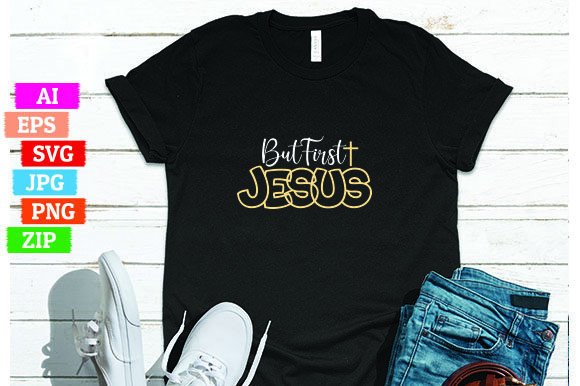
Buy First Jesus: A Designer's Review for Embroidery Projects
As a designer who spends more time staring at stitch maps than most people spend on their phones, I approach every new machine embroidery design with a mix of curiosity and skepticism. When I first encountered the Buy First Jesus graphic, my initial reaction wasn't about the spiritual message—though that is powerful—but about the technical execution. How does this typography translate from a screen to a textured fabric? Does it hold up under the needle, or does it fall apart in the hoop? After reviewing the available files and simulating the stitching process in my mind, I'm ready to share how this asset fits into a real-world embroidery project.
First Impressions: Mood and Visual Personality
The Buy First Jesus design carries a bold, declarative mood. It isn't subtle, nor does it try to be. The layout suggests a strong typographic focus, which is excellent for making a statement on custom apparel. Visually, the design feels modern yet timeless, suitable for a wide range of demographics. For an Etsy seller or a small shop owner, this kind of clear messaging is gold. It stops the scroll on social media and catches the eye on a crowded craft fair table.
However, as a reviewer, I have to look past the aesthetic. The "eye-catching" nature mentioned in the product description implies high contrast and distinct shapes. In embroidery, this usually translates well to satin stitch borders or dense fill stitch areas. The challenge with text-based designs is always legibility. If the letters are too close together, the thread buildup can cause them to merge. If they are too far apart, the design loses its impact. Based on the preview, the spacing appears balanced, suggesting it was created with production in mind.
Real-World Application: The Tote Bag Scenario
To truly evaluate this digital embroidery file, let's imagine a specific scenario. You run a boutique selling eco-friendly goods, and you want to create a limited run of canvas tote bag design items for the holiday season. You choose Buy First Jesus as the centerpiece.
In this context, the design shines. Canvas provides a stable base, reducing the risk of fabric distortion during stitching. The bold text would likely be rendered using a combination of running stitches for finer details and satin columns for the thicker parts of the letters. On a natural-colored tote, using a deep navy or black thread would create the necessary contrast. The result is a handmade product that feels professional and intentional. Customers aren't just buying a bag; they are buying a statement piece that aligns with their values.
This same logic applies to sweatshirt embroidery. Imagine a heavyweight cotton blend fleece. The texture of the fleece adds depth to the stitches. Here, the design acts as a focal point on the chest or back. It transforms a basic garment into a personalized gift or a piece of small shop product inventory that commands a higher price point due to its custom nature.
Navigating Technical Challenges
While the design has potential, practical application requires caution. Not every surface is created equal. If you plan to use Buy First Jesus on a curved surface like a cap, you must consider the hoop size and the curvature of the buckram. Text designs can sometimes warp if the digitizing doesn't account for the pull of the thread on a curved plane. I recommend testing this on a scrap piece of similar material before committing to a full production run.
Similarly, be wary of using this on very thin or stretchy fabrics without proper stabilization. A stabilizer is not optional here; it is essential. Without it, the dense areas of the text could cause the fabric to pucker, ruining the clean lines of the typography. For dark fabrics, ensure your thread colors have enough vibrancy to pop. A dull red on a black hoodie might look muddy rather than bold. Always test your thread colors against your chosen fabric texture.
Another consideration is the level of detail. If the design includes intricate serifs or tiny connecting lines, these might not survive frequent washing or heavy wear. This is particularly important for items like baby embroidery projects or kitchen towels that will see regular use. In such cases, simplifying the stitch count or opting for a slightly larger version of the design might preserve the integrity of the finished product.
Enhancing Brand Value and Customer Trust
Using a high-quality graphic like Buy First Jesus directly impacts your brand perception. When a customer receives an item with crisp, clean stitching and a coherent design, it builds trust. It signals that you care about quality. Conversely, a poorly executed design can damage your reputation. Since this asset is categorized under Freebies and Graphics, it offers a low-risk opportunity to experiment. You can create printable mockup images for your online store to gauge interest before stitching a single thread.
For commercial embroidery ventures, consistency is key. If this design fits your brand's voice, it can become a staple in your catalog. Whether it's for holiday embroidery gifts, wedding favors, or everyday wear, the versatility of the message allows it to transcend specific seasons. It appeals to a broad audience looking for faith-based design assets that are stylish rather than cliché.
Practical Notes for the Studio
Before you load this file into your machine, here are a few actionable steps to ensure success:
- Check the File Formats: The product description mentions editable AI and SVG files. These are vector formats great for printing or further digital editing, but for embroidery, you need a specific embroidery file format (like PES, DST, or EXP). Ensure you have the correct digitized version for your machine.
- Test on Scrap Fabric: Never skip the test stitch. Use a scrap piece of the actual fabric you intend to use to check for puckering or thread breaks.
- Review Stitch Density: Look at the stitch map in your software. Are there areas that are too dense? If so, you might need to adjust the underlay or reduce the fill density.
- Verify Licensing: Even though it is listed as a freebie, always confirm the license terms. Can you sell the finished product? Can you use it for commercial purposes? Clarity here protects your craft business.
- Contrast Check: View your design in black and white. If the text disappears, your color contrast might be insufficient for the final look.
In conclusion, Buy First Jesus is a promising asset for designers who understand the nuances of textile decoration. It offers a strong visual hook and versatile application possibilities, from embroidered patches to full-sized back prints. However, its success relies entirely on the execution. By respecting the limitations of your materials and machinery, you can turn this simple graphic into a standout piece that resonates with customers and elevates your portfolio. As with any applique design or text-heavy motif, the devil is in the details, but when done right, the result is nothing short of inspiring.