We Wish You a Very Merry Christmas: A Designer's Review
As we approach the peak of the holiday rush, my workbench is usually covered in scraps of felt, rolls of stabilizer, and half-finished garments. This year, I decided to test drive a popular seasonal asset titled We Wish You a Very Merry Christmas. While the product listing categorizes it under Freebies and Graphics, specifically noting its utility as an SVG for Cricut and Silhouette machines, my interest lies in its potential as a machine embroidery design. For those of us running small shops or managing Etsy seller accounts, the difference between a vector cut file and a stitched embroidery file can make or break a finished product.
First Impressions and Visual Personality
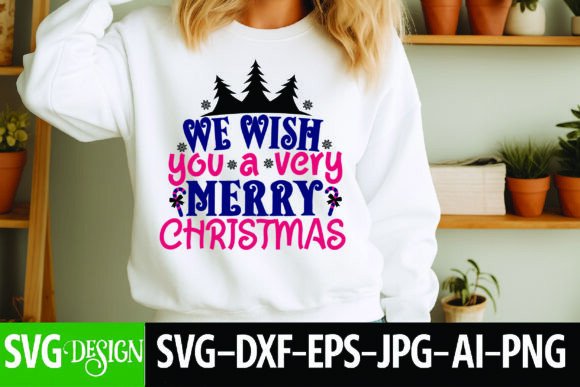
When I first pulled up the design on my screen, the immediate takeaway was its classic, cheerful mood. The layout feels balanced, avoiding the cluttered look that often plagues holiday graphics. For an embroidery project, spacing is everything. If elements are too close, the needle bars collide, or the thread creates a messy bird's nest. Fortunately, the composition of We Wish You a Very Merry Christmas suggests enough breathing room between letters and decorative motifs to allow for clean stitching.
The visual personality leans towards traditional rather than modern minimalist. This makes it a versatile candidate for various handmade product lines. It doesn't scream "trendy" in a way that will feel dated by January; instead, it offers a timeless appeal suitable for heirloom-quality items. However, since the source material is described as a high-quality vector for cutting machines, any embroiderer intending to use this must ensure they have access to a properly digitized version. You cannot simply feed an SVG into an embroidery machine without considering stitch types like satin stitch for borders, fill stitch for larger areas, or running stitch for fine details.
Real-World Application: The Holiday Tote Scenario
To truly evaluate this design, I envisioned a specific real-life scenario: creating a limited run of canvas tote bag design options for a local boutique. The goal was to offer a personalized gift option where customers could add their family name below the main graphic. In this context, We Wish You a Very Merry Christmas shines as a central focal point.
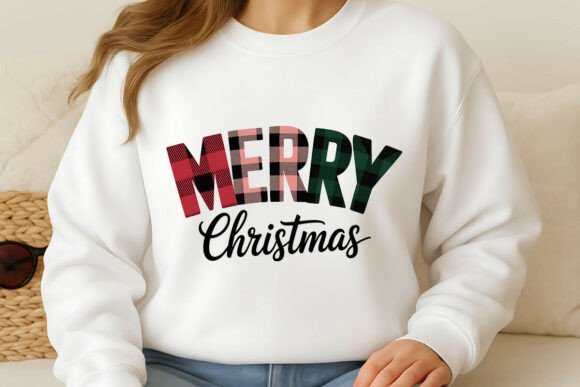
On a sturdy canvas tote, the design holds its shape well. The texture of the fabric supports the density of the stitches without puckering, provided the correct stabilizer is used underneath. I imagined this same graphic applied to a heavy cotton sweatshirt embroidery project. Here, the boldness of the text ensures readability even from a distance, which is crucial for custom apparel meant to be worn at parties or family gatherings. The design's scale seems appropriate for a standard 5x7 hoop, making it accessible for most home hobbyists and semi-professional setups alike.
For baby embroidery, such as a festive onesie or a nursery pillow cover, the charm of the design translates beautifully. However, one must be cautious. Babies have sensitive skin, so if the design includes dense fill areas or scratchy metallic threads, it might need a soft backing or a switch to softer thread colors like matte cotton rather than shiny rayon.
Technical Considerations and Fabric Challenges
While the aesthetic is strong, practical application requires a critical eye. Not every surface is friendly to complex graphics. If you plan to stitch We Wish You a Very Merry Christmas onto a curved surface like a cap, you must verify the design's width. Caps have a limited stitching field, and wide phrases often require re-digitizing to fit the curve without distortion. Similarly, stretchy fabrics like jersey knits demand careful attention to stitch density. If the design is too dense, it will restrict the fabric's stretch and cause the garment to warp after washing.
Dark fabrics present another challenge. The original description mentions it is ideal for making custom items, but it does not specify color variations. When working on black or navy backgrounds, you must ensure the thread colors chosen provide sufficient contrast. A dark red on a black sweatshirt might look muddy; swapping to a bright crimson or adding a light-colored underlay can save the design. Furthermore, tiny lettering within the phrase needs inspection. If the digits are too small, the satin stitch columns may become too narrow to hold, resulting in thread breaks or poor coverage.
Where to Use With Caution
- Small Hoop Sizes: Ensure the full phrase fits without resizing it to the point of losing detail.
- Textured Fabrics: Terry cloth or thick fleece can swallow small details; this design works best on smoother surfaces.
- Frequent Wash Items: Kitchen towels and aprons undergo rigorous washing. Verify that the stitch count and locking mechanisms are robust enough to survive dozens of cycles.
- Layered Garments: Stitching through multiple layers, such as a lined jacket, requires checking needle penetration and thread tension.
Impact on Brand and Customer Trust
For craft business owners, the quality of your design assets directly reflects your brand consistency. Using a crisp, well-executed design like We Wish You a Very Merry Christmas enhances the perceived value of your small shop product. Customers associate clean stitching with professionalism. Conversely, a design that pulls or gaps can erode trust quickly. In the realm of commercial embroidery, reliability is key. If this design performs consistently across different fabric types, it becomes a staple in your library, allowing you to produce printable mockup images that accurately represent the final item.
The "giftability" factor is also high. Holiday shoppers are looking for items that feel special and ready to give. A well-stitched message conveys thoughtfulness. Whether it is an embroidered patch for a scout uniform or a decorative accent on a holiday table runner, the emotional resonance of the message combined with technical execution drives buyer engagement.
Practical Notes for the Embroiderer
Before committing to a production run, I always advise a few non-negotiable steps. First, test the design on scrap fabric that matches your final material. This reveals issues with tension or registration that aren't visible on a screen. Second, check thread color contrast by viewing your test stitch-out in black and white; if the design disappears in grayscale, your color choices lack definition.
Since the product is listed as a graphic/SVG, remember to confirm licensing before selling finished items. Just because a file is a "freebie" for personal cutting projects does not automatically grant rights for commercial embroidery sales. Always read the terms of use. Additionally, review stitch density settings if you are digitizing the vector yourself. Overly dense fills waste thread and time, while sparse fills look amateurish.
Finally, consider the end-user experience. Will this holiday embroidery piece be comfortable? Is it durable? By answering these questions during the prototyping phase, you ensure that We Wish You a Very Merry Christmas serves not just as a pretty image, but as a functional, high-quality component of your creative enterprise.